Building a SaaS Platform Designed to Streamline Business Operations

  1. Home
  2. Project
  3. Rutio – Building a SaaS Platform Designed to Streamline Business Operations

Project overview

Rutio is a freight marketplace platform built for transport companies that need more than a presentation website. It was designed to help shippers publish freight, help carriers find loads and give both sides a working system for managing transport operations.

Instead of a simple listing board, the platform includes onboarding by role, verified company flows, freight and truck matching, route management and dashboards built for daily use.

The value of the project is simple: this is software built around how transport companies actually work.
Platform highlights

  • Freight marketplace infrastructure
  • Carrier verification system
  • Shipment management dashboard
  • Route and order tracking
  • Role-based user permissions
  • Laravel backend
  • Next.js frontend
  • Scalable SaaS architecture
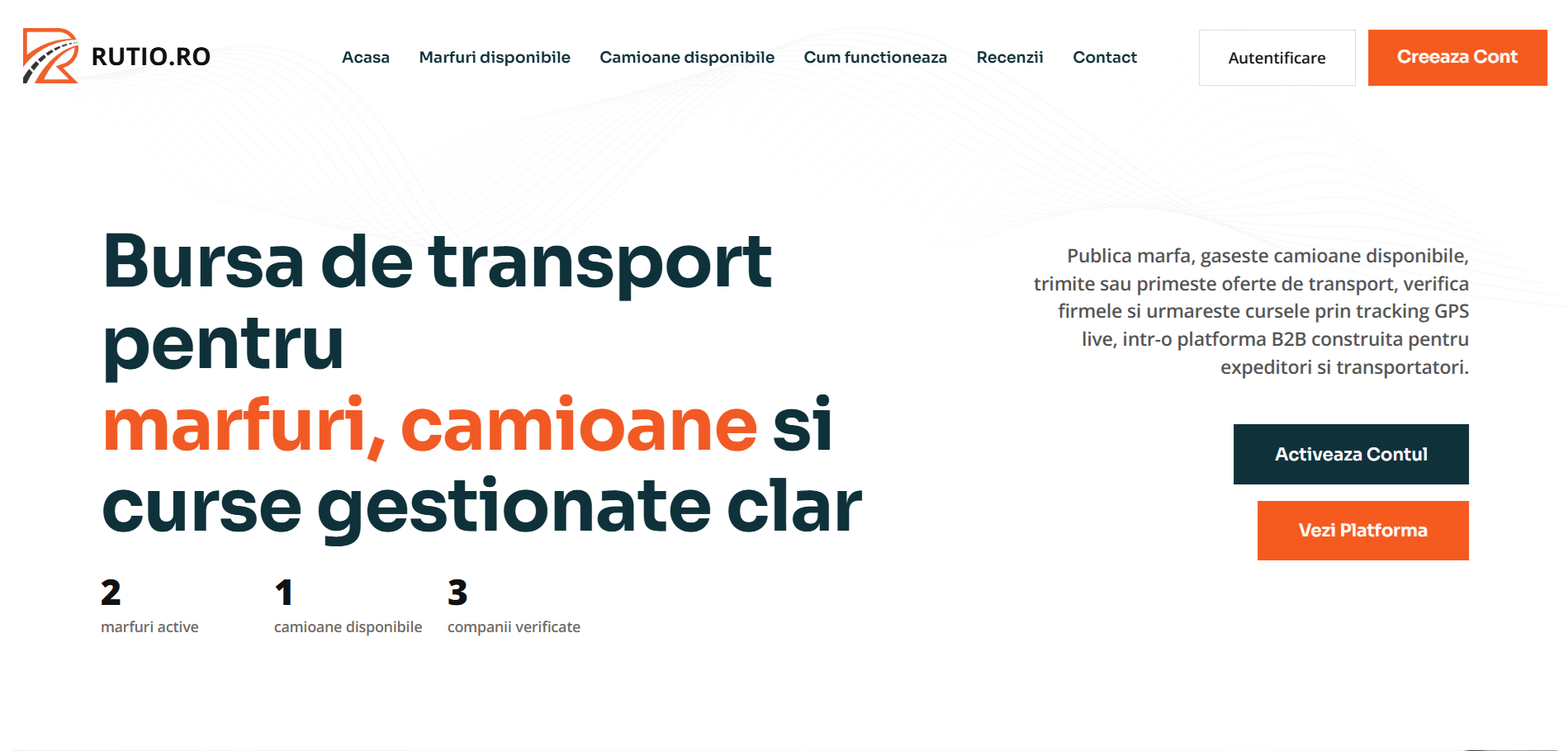
Rutio homepage presenting the B2B transport platform for freight, trucks and route management.
The public-facing homepage positions Rutio as a transport platform built around clarity, verified companies and practical operational use.

The challenge

The transport industry moves fast, but many workflows still happen through calls, messages and fragmented spreadsheets. For Rutio to be useful, it had to simplify how freight owners and carriers connect while also giving them a clear system for managing work after the match happens.
  • Freight publishing and truck discovery needed to be fast and easy to understand
  • The platform had to support two distinct user types: shippers and carriers
  • Dashboard logic had to change based on user role and permissions
  • Operational actions like offers, documents, invoices, disputes and route tracking had to live inside one system
  • Trust mattered, so the product also needed carrier verification and a more serious business flow than a generic listing site
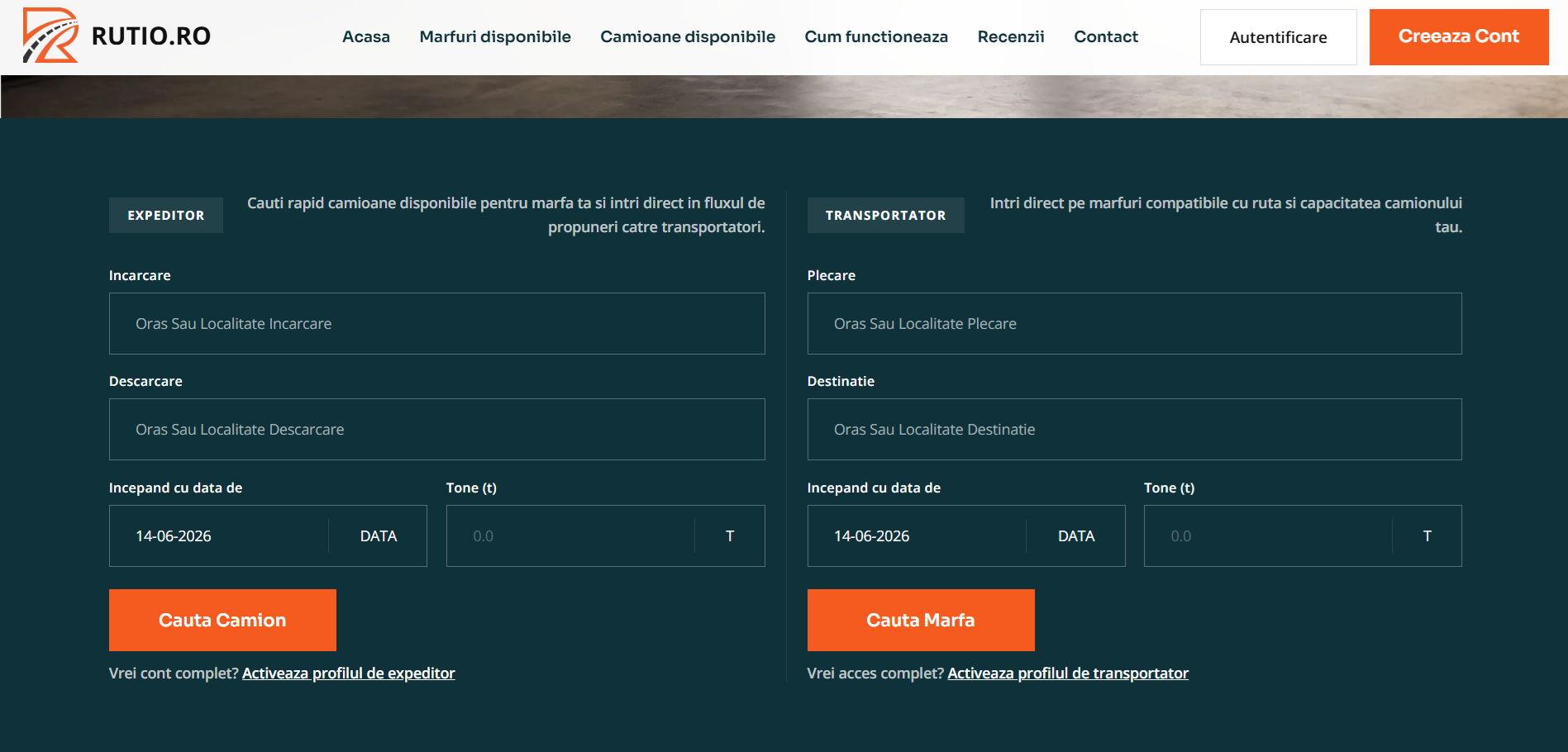
Rutio search interface for shippers and carriers with route, date and tonnage fields.
The dual search flow makes the product immediately useful for both sides of the marketplace: freight owners looking for trucks and carriers looking for compatible loads.

Our approach

1. Clear marketplace structure

Rutio had to explain itself quickly. From the first screen, users need to understand what the platform does: publish freight, search for trucks, compare options and move transport work into a more structured digital flow.

  • The homepage explains the freight and carrier matching model directly
  • The search module makes the product useful from the first interaction
  • Public CTAs push visitors toward platform use, not passive browsing

2. Role-based onboarding and permissions

One of the strongest parts of the product is the onboarding logic. Instead of giving every user the same account and hoping they figure it out, Rutio separates the experience from the start based on business role.
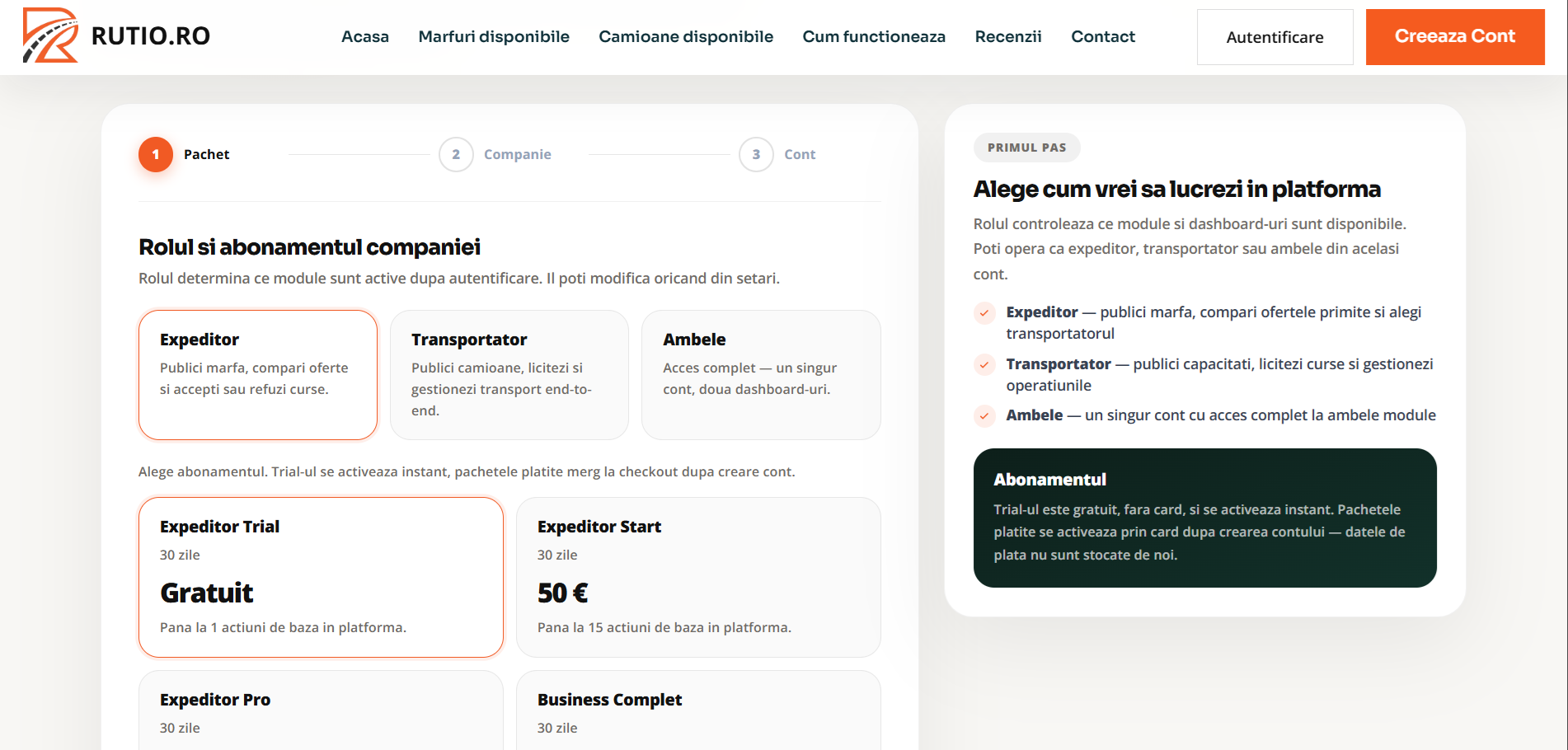
  • Users can join as Expeditor, Transportator or both
  • That role selection changes what they can access and how the platform serves them
  • The onboarding flow introduces permissions, account logic and subscription structure in a controlled way
Rutio role and subscription selection flow for company onboarding.
The onboarding flow clarifies user role, available modules and subscription logic before the account becomes operational.

Our approach

3. Dashboards built for real transport work

After signup, the product still had to prove it could support real operations. Rutio was built as a working platform, not a decorative member area.

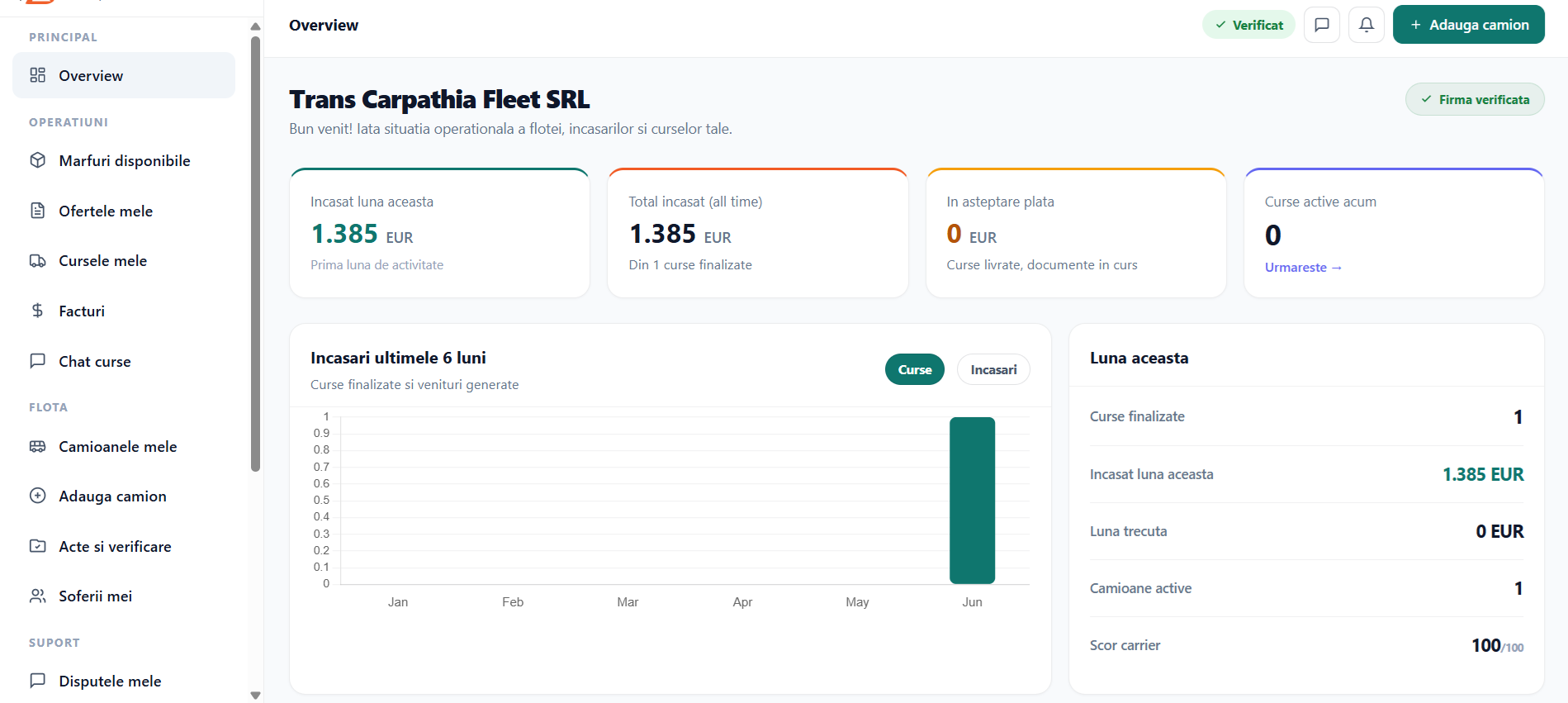
  • Dashboards organize active routes, completed routes, live tracking, invoices, documents, disputes and fleet information
  • KPI cards and status areas help companies understand what is happening at a glance
  • Map and route components push the product beyond listings into real transport software

4. Verification, transactions and trust

Transport marketplaces only work if users trust the companies they interact with. Rutio includes visible verification and transaction-related flows that make the product feel more controlled and more credible.
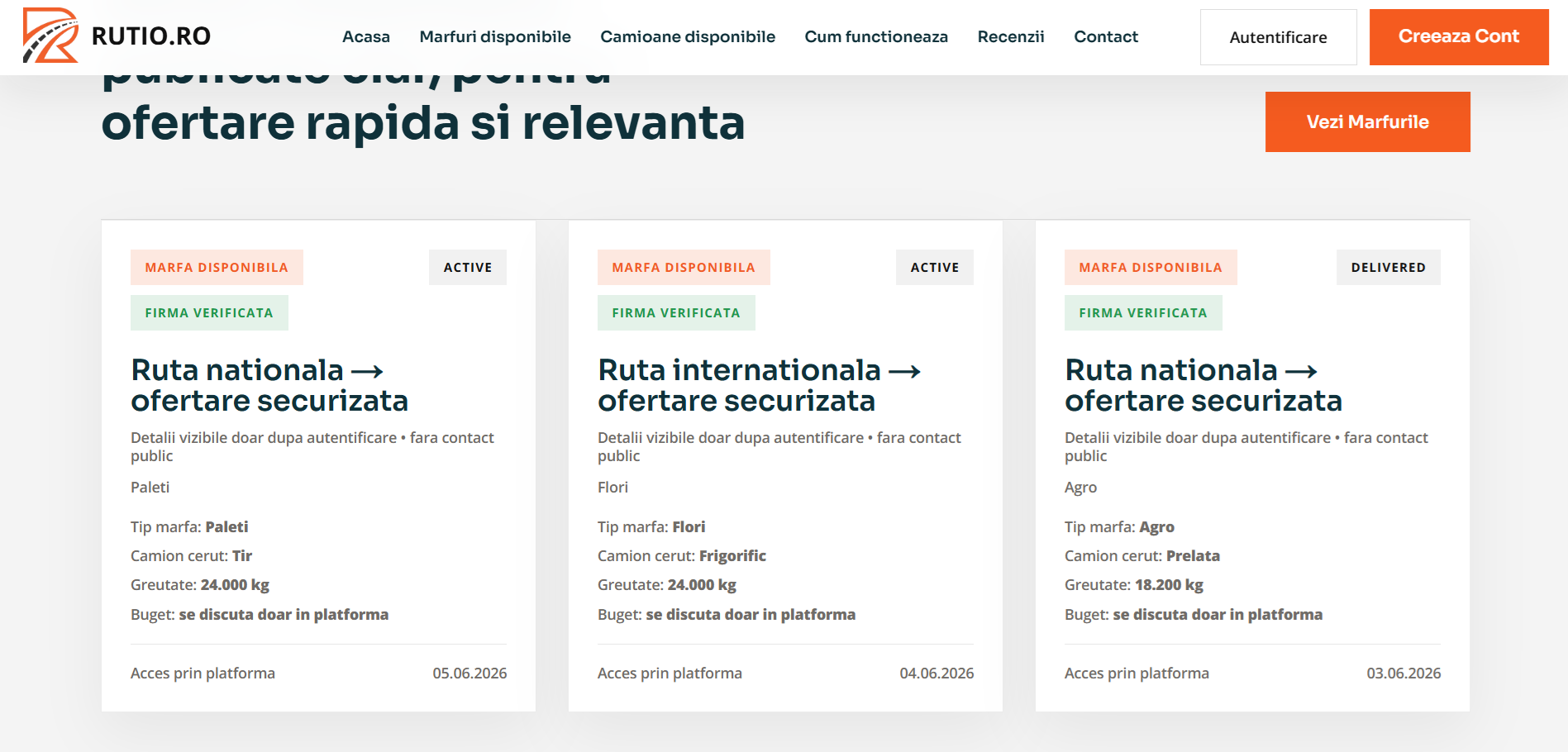
  • Freight cards keep key route details visible while protecting sensitive information
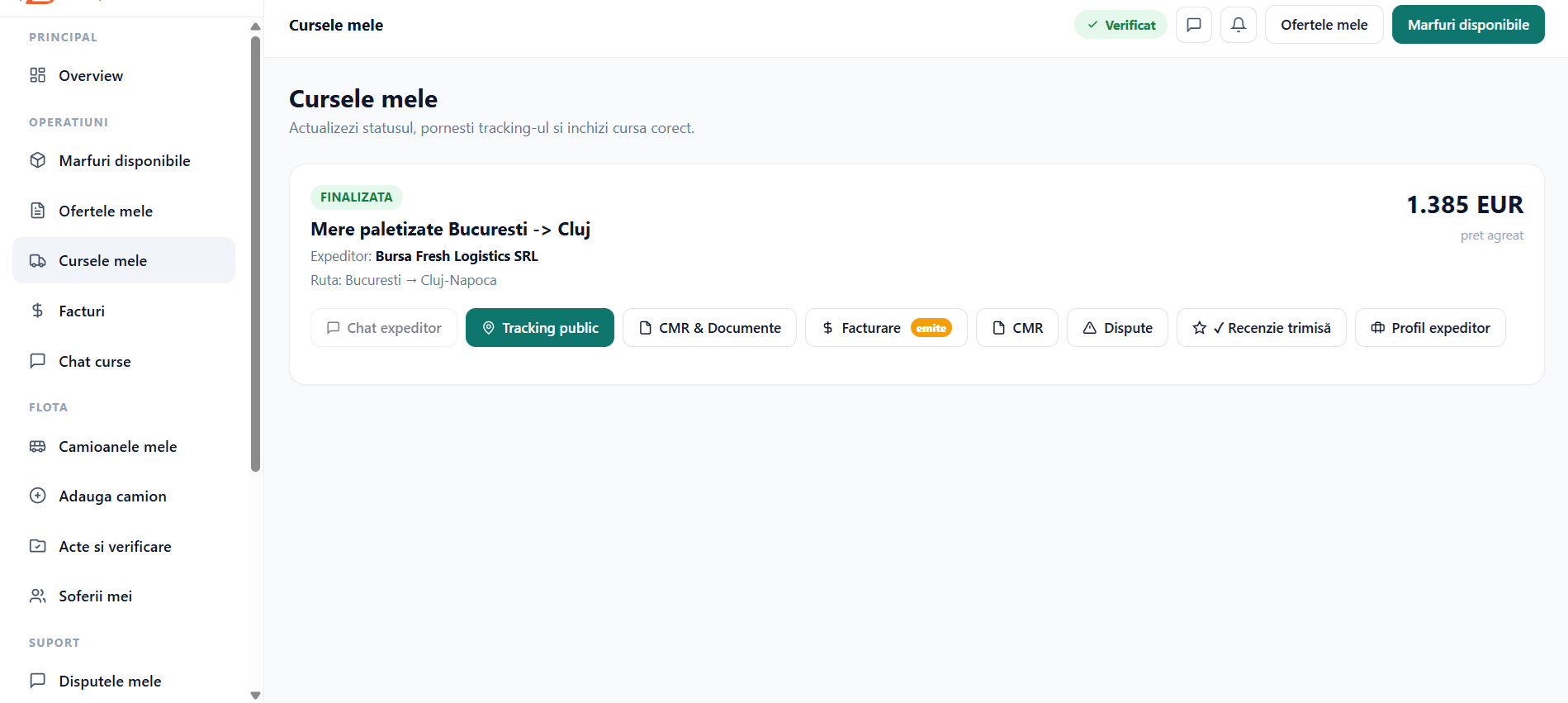
  • Completed route views include pricing, partner, documents, invoicing and dispute actions
  • Admin views show a serious management layer behind the customer-facing product
Rutio dashboard with revenue cards, route overview and operational summary.
The main operational dashboard translates transport activity into a more readable and manageable workflow.
Rutio route management screen with public tracking, documents, invoicing and dispute options.
Course management goes beyond listings and moves into execution, documents, billing and post-delivery actions.
Rutio freight listing cards showing route types, truck types and protected budget details.
The freight cards support fast decision-making while keeping sensitive commercial details inside the platform flow.
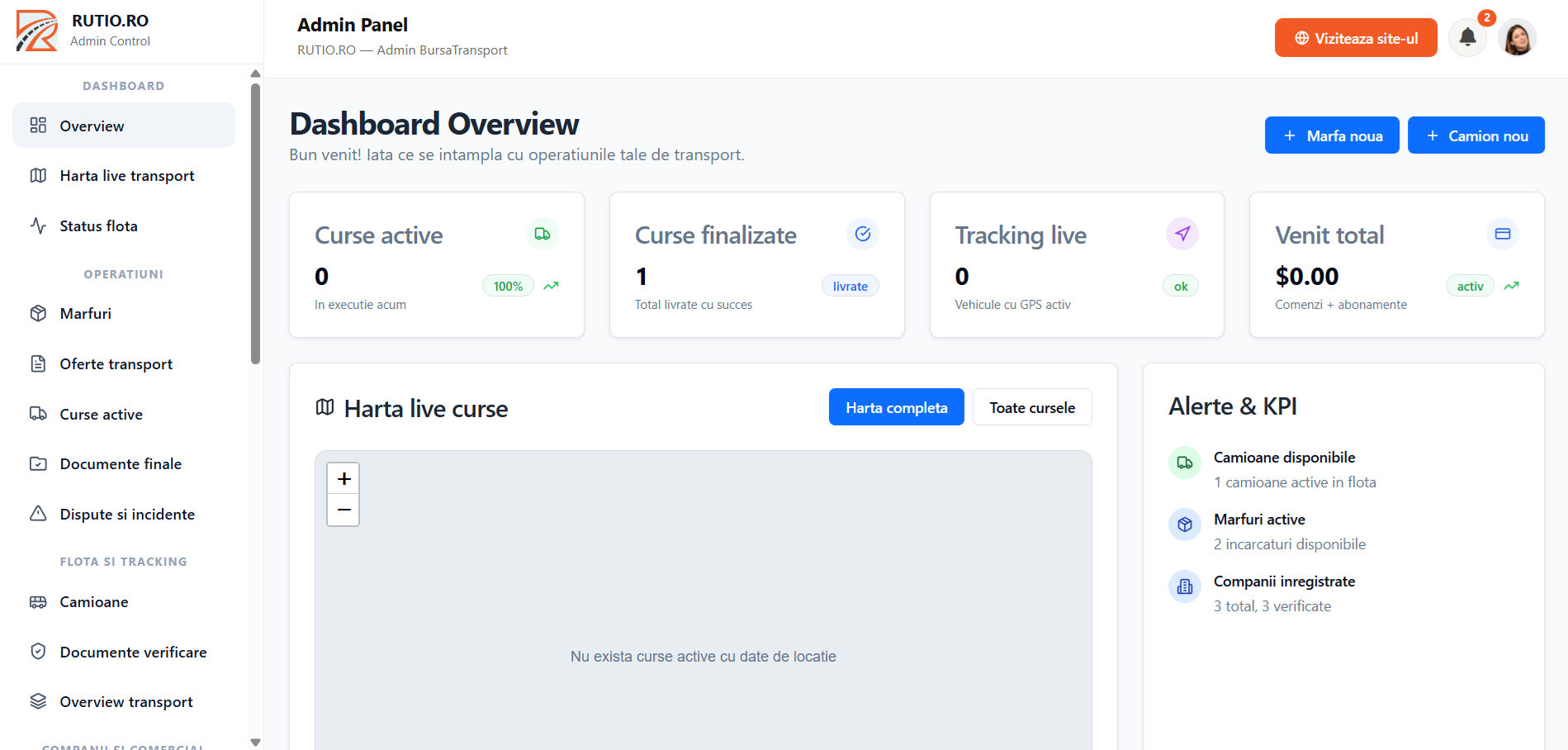
Rutio admin dashboard with live map area, KPI alerts and operational overview.
The admin layer confirms that Rutio was designed as a structured product with oversight, controls and scalable operational visibility.

Result & impact

Rutio already communicates something more valuable than a standard website project: WEBOG can build software products with real business logic.

  • The platform clearly explains what it does: freight marketplace, transport matching and route management
  • The onboarding flow proves the product was designed around roles and permissions, not generic accounts
  • The dashboard layer shows repeat operational use, not just signups
  • Features like live tracking, documents, invoices, disputes and verification make the system feel commercially real
  • The local screenshots already show verified companies, active freight, available trucks and a completed route value of 1,385 EUR

Why this project matters

Rutio demonstrates WEBOG's ability to build software products, not just websites.

The platform required custom business logic, role-based permissions, marketplace workflows, operational dashboards and scalable architecture designed for future growth.

Unlike a traditional website project, every feature had to support real operational processes used daily by transport companies and logistics operators.

Lets address your questions today!

Project timelines vary based on complexity and scope. We provide a detailed timeline during the initial consultation.

Project timelines vary based on complexity and scope. We provide a detailed timeline during the initial consultation.

Project timelines vary based on complexity and scope. We provide a detailed timeline during the initial consultation.

Project timelines vary based on complexity and scope. We provide a detailed timeline during the initial consultation.

Project Name

SakariPet

Category

Web Design

Client

Robert G.

Duration

2026 - Present

Technology

WordPress · WooCommerce · PHP · JavaScript · REST API · Klaviyo · Elementor Pro

Share:

You have different questions?

Our team will answer all your questions. we ensure a quick response.